

Ava, p.11
Ava, page 11
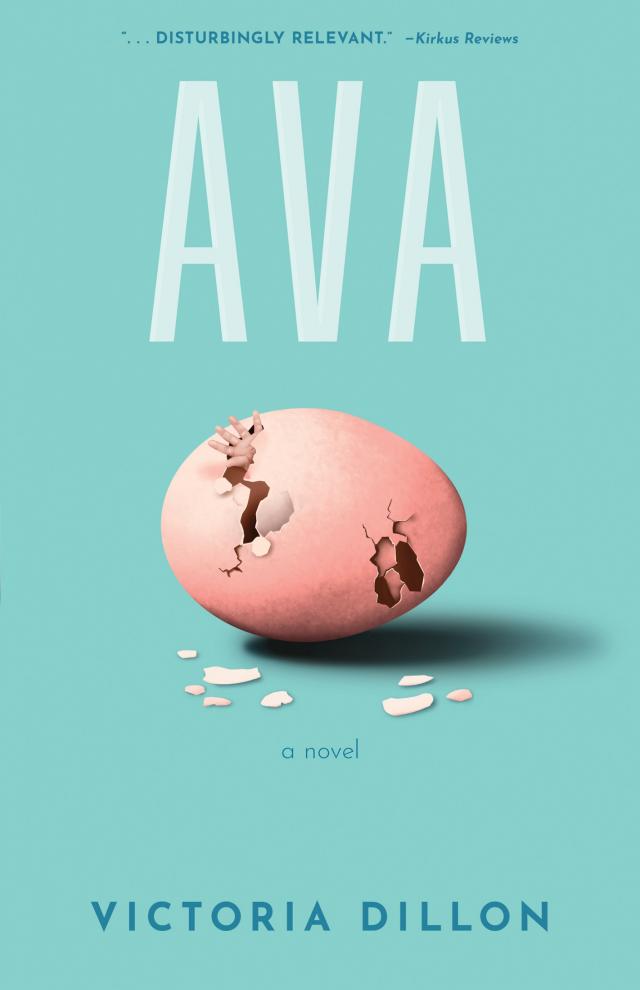


The physician walked in a few minutes later and said to Gabby, “So, I hear you’re having some trouble breathing?”
He didn’t introduce himself or acknowledge James. James didn’t care as long as he took good care of his wife.
“Yes, sir. It came on suddenly this morning.”
“And you’re a new mom, I see. First time? How is that going?”
“Yes. He’s an easy baby. No problems.”
“That’s good. Any allergies? Prescription drug use? Smoker? Illicit drug use? Any history of anxiety or depression?” he asked as he listened to her heart and lungs.
“No. Nothing, although I have felt more anxious tonight,” Gabby replied.
“Okay. Your lungs are clear. We’ll check a few things, and I’ll come back to talk to you later,” he said as he twisted a knob on a green cylinder beside her. “Let’s see how you do without this.”
He stepped out and called to the nurse. “Let’s get a chest X-ray, CBC, CMP, and urine drug screen in six.”
James became mildly irritated. “‘Six.’ How about ‘the patient in six’? Or ‘Dr. Gabrielle Davis in six’?”
“James. I don’t mind. I’m sure they’re busy. I’m a PhD. Not an MD. I only ask to be called ‘doctor’ in the classroom. Let them do their job, baby.”
A laboratory tech came in to draw blood for Gabby’s labs. The nurse also helped her get to the bathroom for a urine sample, then put her in a wheelchair, and another tech took her to the radiology department for her chest X-ray.
James asked the nurse, “Why do you need a urine drug screen? Do drugs usually cause trouble breathing?”
“Just standard screening,” the nurse replied.
While James waited for Gabby to come back, he talked to his little boy, who was starting to wake and root for his mother’s breast.
“Hey, little man. She’ll be back soon, okay? You know how much she wanted you? So much it hurt, and now that you’re here, we love you so much it hurts even more. You’re going to do great things with her mind and my good looks.” He laughed as James Jr. started to fuss. “Yeah, I know . . . you got your good looks from her, too.”
Gabby came back, and the nurse helped her back onto the gurney. “Ooooh. That made me dizzy,” Gabby said, steadying herself using the bed railing.
“Make sure you’re drinking plenty of fluids while you’re breastfeeding. You’re probably getting a little dehydrated,” the nurse advised.
James helped place the baby on Gabby’s chest so she could nurse as they waited for the doctor to return. He easily latched to his mother and immediately started to suckle. Outside the room, there continued to be a lot of chaotic conversations in the bustling emergency department.
Several hours later, the doctor came back to the room. He said, “Your labs look good, your chest X-ray was normal. Your heart rate is still a little fast, but new moms tend to be anxious.”
“What about her oxygen level?” James asked.
“It’s staying above 90 percent most of the time without supplemental oxygen. You don’t have to make a hundred to pass the test. I’d recommend you call your doctor in the morning. Look into some treatment for postpartum depression.”
“Even though I’ve never been depressed or anxious before?” Gabby pressed.
“Well, you said you have been now. It can happen with a new baby. Your symptoms acutely worsening this evening are likely from a panic attack.”
“Okay. Maybe. I still just don’t feel right,” Gabby said.
“Life changes a lot after a baby. If you get worse, you can always come back. We never close. The nurse will be back with your discharge instructions.”
The nurse returned a short time later with the paperwork. The discharge instructions listed the anxiety diagnosis at the top, followed by instructions to call her obstetrician in the morning. Neither Gabby nor James felt certain of the diagnosis, but according to the paperwork, Gabby was being sent home in good condition.
She still felt short of breath in the car. “Maybe I am anxious? Maybe I’ve been suppressing my feelings? I hope that’s all it is.”
When they got back to the house, James showered and got ready for work. He made some extra coffee for the commute to the high school where he taught. He kissed his baby boy on his head and his wife on her cheek as Gabby nursed James Jr. in bed. He said, “You’re going to call the obstetrician first thing, right? And you are going to tell them you need to be seen today, right?”
“Yes, James. I will. Thank you for worrying about me.”
“That’s what love does to me. Makes me worry and makes me crazy, so now I’m crazy with worry. I’ll only work a half day. I’ll get someone to cover the afternoon. Can your mom come over this morning?”
“I’m sure she can. I’ll call her. You go on to work,” Gabby said. She coughed and held her chest. “Maybe I’m coming down with the flu or something.”
“Call the doctor. Please.”
“Yes, baby. As soon as they open. I promise. Love you.”
“Love you.”
Gabby’s mom arrived later that morning and used her key to open the front door. She immediately heard James Jr. screaming from the back bedroom.
“Gabby! Honey!” she called out. “Are you in the shower? That’s a hungry baby cry I’m hearing!”
She made her way toward Junior’s persistent wailing. When she walked into the bedroom, she found Gabby’s lifeless body face down next to the bassinet.
CHAPTER 21
“Cardiopulmonary arrest following acute pulmonary embolism” was the conclusion from the coroner’s report.
Gabby hadn’t died from anxiety. She hadn’t suffered a panic attack. She’d died because blood clots had traveled through her bloodstream to her lungs. She’d had a rapid heart rate, her oxygen level had been borderline, she’d had shortness of breath, and she’d been misdiagnosed. Being Black and having recently had a baby, she was at a higher risk of postpartum complications—but she was misdiagnosed. She’d gone to the emergency room immediately, but she was misdiagnosed.
James Davis Jr. grew up knowing his mother had died from an embolism when he was a newborn. When he turned eighteen, his father shared the autopsy report with him, and he learned his father had hired a malpractice attorney, who agreed that the medical staff had missed his mother’s diagnosis. A few years later, his father had received a large settlement from the hospital for their mistake.
James Davis Jr. knew his dad had wanted to take the doctor, the nurses, and the hospital’s CEO to court—everyone he felt was to blame. His dad had wanted a jury and everyone else to know what had happened to his wife, but his lawyer convinced him to take the settlement and ensure his son’s financial future. When he agreed, he reluctantly signed a nondisclosure agreement shielding the doctor and emergency room’s errors from the public eye.
His father didn’t spend a cent of the money he’d received in the settlement. He didn’t want any of it. He raised his son on his teacher’s salary, and they lived a comfortable life with the help of a modest payout from Gabby’s life insurance policy. He saved the money for his son, both to fund his education and to help him do great things.
As James Davis Jr. unpacked his clothes when he moved into his dormitory at the University of Memphis his freshman year, his dad told him he wanted him to use his education to find a way to prevent others from dying like his mother had.
“I want you to be a different kind of doctor than the one who treated your mother,” his dad said. “I want you to be the kind of doctor who listens to your patients. Who gets to know them as a human.” He placed a stack of T-shirts in his son’s dresser. “That doctor didn’t know anything about your mom. He didn’t know she was the first in her family to go to college. He didn’t know she loved Shakespeare or that her doctoral thesis was on the modern iambic pentameter.” He closed the drawer and turned to remove more clothes from a cardboard box sitting on the bed. “That doctor didn’t know how much she wanted you and what a wonderful mother she would have been. She was just a number, not even a name.” He shook his head at the recollection.
“I understand, Pops. I’ll do my best and work my hardest. I want to make you proud,” James reassured his father as he folded more T-shirts.
“Or you could be a lawyer,” his dad continued as he hung his son’s jeans on wire hangers. “Not a malpractice lawyer. I don’t want you making money from others’ mistakes.” He turned and wagged a finger at his son. “Stop the mistakes before they happen. You need to be the kind of lawyer who fights to stop doctors from working twenty-four hours straight with no sleep, like your mom’s doctor had done.”
“Whatever path I take, I’ll make you proud,” James iterated.
His dad stopped working, cleared a spot on the bed, and sat down. “Sit here, Son,” James’s dad said as he patted the space next to him. “Please use your money and your mind to help other women like your mother. If you think you’ll be silenced for raising your voice, then be thoughtful and quiet,” James Davis Sr. implored.
“You want me to be quiet, Pops? Would Mom have wanted that?” James Davis Jr. asked with surprise.
“You can be quiet and still make noise—just make good trouble for those who need you. Their voices will raise up around you, and their volume, in both sound and number, will be rapturous.” James’s father put his hands on his son’s shoulders and squeezed them gently. “Your mother will hear them. I promise you that.”
James Davis Jr. wanted to honor his mother’s legacy by helping other women, but he didn’t think that being a doctor or lawyer would make a big enough impact. He didn’t want to change things for some women. He wanted to change things for all women.
He changed majors several times during college, not because he failed any classes but because he dove deep into and relished every subject from history to chemistry to philosophy. He struggled with narrowing down what he wanted to do. He studied voraciously for all his classes and read about maternal morbidity and mortality during what little free time he had.
When he was younger, his understanding of pregnancy complications had been limited to the morning sickness and unusual cravings he saw on television sitcoms or overheard as his pregnant aunties commiserated. But in college, he read about pulmonary embolisms—both during pregnancy and after pregnancy—like the one that had taken his mother’s life. The list of potential complications went on and on. There was also preeclampsia (which could lead to seizures), gestational diabetes, amniotic fluid embolism, and placental abruption. He also learned that these complications affected Black women at a higher rate than they affected others. The reasons were complicated and multifactorial, including implicit bias, structural racism, and lack of access to health care. He knew that fixing any of those issues on his own was beyond his reach. He had to think of another way.
During his classes, he preferred to sit in the last row of the lecture halls, sitting back in his chair, his hands folded in his lap, eyes closed as he listened. His professors became used to his aural learning style. He was never scolded for attempting to stealthily nap like some of his classmates would do. He would often abruptly open his eyes and raise his hand to ask a question before returning to his regular posture.
During his junior year, he listened intently in his anthropology class, eyes closed, as his professor discussed the differences in women’s birth experiences compared to other mammals.
“There are major differences regarding how women experience giving birth compared to other mammals,” the professor explained. “They labor much longer than other mammals and typically need assistance from an obstetrician or midwife to give birth, almost without exception, while other mammals labor and deliver alone.”
The professor then advanced the slide to one titled “The Obstetrical Dilemma.”
“In humans, infants’ heads are large compared to narrow maternal hips,” the professor continued. “This makes delivery challenging and can lead to mothers needing C-sections. According to the hypothesis, women need a wide pelvis to bear big-brained babies—those coveted ‘good birthing hips’ you may have heard of—but they also need a narrow pelvis to walk or run efficiently. It’s an evolutionary trade-off.”
James opened his eyes and raised his hand.
“Yes. What is your question?” the professor asked.
“Is this why human babies are born altricial?” James queried as the other students turned toward him, appearing confused by the term.
“Ah, yes. You’ve been studying,” the professor replied. “That is what has been postulated. Human babies are born altricial—or helpless—compared to some other mammals because they cannot continue to mature physically and neurologically inside their mother as long as other mammals, due to the human mother’s small pelvis.”
“And this would be an example of antagonistic evolution, correct?” James asked.
“Correct. The need for bipedal locomotion necessitates a smaller pelvis, which can lead to a more challenging and risky childbirth process. Excellent questions.”
James was astounded by the challenges and potential complications that prevented many women from having uneventful pregnancies and healthy babies. He saw these complications as failures of evolution, and he saw the solution as altering women’s evolutionary course—not through natural selection but through deliberate genetic intervention.
He started focusing on his genetics and biology classes in college. He learned about the commonality of DNA between species and the various genetic pathways that determine our physical characteristics. He was fascinated by comparative biology, and his interests led him to pursue a doctorate degree. His area of focus was the development of reproductive organs in mammals and other animal groups and how they diverge over time.
In James Jr.’s view, avian species’ reproductive mechanisms were far superior to humans’ mechanisms. Chickens can make an egg within twenty-four hours, lay an egg in thirty minutes, and incubate the egg for three weeks before it hatches. A simple, beautiful, and easy process and so evolutionarily efficient.
He wondered if it was possible to tweak human reproductive evolution to make it better. What if women could lay eggs like a chicken does? he pondered one evening as he studied in the library. Of course, the timeline would be much longer than that of a chicken. It would still take nine months or so for a baby to incubate and grow in an egg. He laughed at the absurdity when he envisioned it as a reality.
But as he revisited the thought, he considered what it would mean for women. No more morning sickness, no swollen feet, no weight gain, no back pain, no fatigue. But more importantly, no risk of preeclampsia, no placental abruption, and no blood clots. So many benefits. So many complications could be avoided.
“Am I crazy or am I a goddamned genius?” he said out loud and smacked the table with the palm of his hand to the shushes of the other students. “What do you think, Mom?” He continued in a lower voice as he looked up at the heavens. “How would you have liked to have hatched me like a baby bird? Ha! I bet you would have loved that, and you’d still be with us. Dad would approve, I’m sure of that.”
After finishing his doctoral degree several years later, he pursued traditional bench research and applied for a federal grant to establish his own lab in Knoxville, where he would study mandibular osteogenesis and facial morphogenesis using an avian model to better understand the sequence of events that led to the development of facial structures. He hoped to identify at a cellular level the cause of birth defects such as the cleft lip and palate that had affected two of his cousins. He hired Susan to be his first employee in 2016.
Dr. Davis knew he’d never get a government grant from the National Science Foundation or the National Institutes of Health for the kind of research he really wanted to do. He would have to use his trust fund money to pursue it on his own after hours. He spent every evening he could working in the lab alone, devoting his time to his foolish—or genius?—idea.
Other researchers had already done much of the groundwork for his project. The Human Genome Project, completed over a decade prior, helped James determine which segments of human DNA were responsible for developing female reproductive organs. Shortly thereafter, researchers used that same technology to analyze the entire genomic sequence of the red jungle fowl, an ancestor of domestic chickens. This gave James the information he needed to compare the two.
He knew the order of adenine, guanine, thymine, and cytosine needed to form the human uterus, fallopian tubes, and ovaries. He also knew the order needed to form the uterus (or shell gland), oviduct, and ovary in hens. Finally, he knew where that order was located within the species’ respective genomes. He just needed to take the information from chickens and substitute it into the human code.
James had colleagues around the country who provided him with the supplies he needed and gave advice when he asked. He was vague about the purpose of his experiments, but he was revered in his field, and his colleagues respected the privacy of his research. Many knew bits and pieces of what he was doing, but he never discussed his ultimate goal.
For the next stage of his research, he ordered HeLa cells from a laboratory catalog. Containing the entire human genome, these cells are a staple of most scientific human cellular research.
James had gotten in the habit of talking to himself in the lab when no one else was there to keep him company. “Thank you for your contribution, Mrs. Henrietta Lacks,” he said, acknowledging the Black woman whose cells had become integral to medical research. He gave a quick kiss to the package containing the cell line. “I hope my work meets your approval.”
As he prepared the cell lines for storage, he said, “You know what, Mrs. Henrietta? They wanted to ban that book that was written about you. Yes, ma’am, ban it right here in Knox County. Some woman didn’t want kids in high school reading about it. She didn’t know the difference between ‘gynecology and pornography,’ as the author said.” He shook his head in disbelief. “If someone ever writes a book about what I’m doing, I guarantee it will be banned and burned.” He chuckled.






