The bone harp, p.1
The Bone Harp, page 1
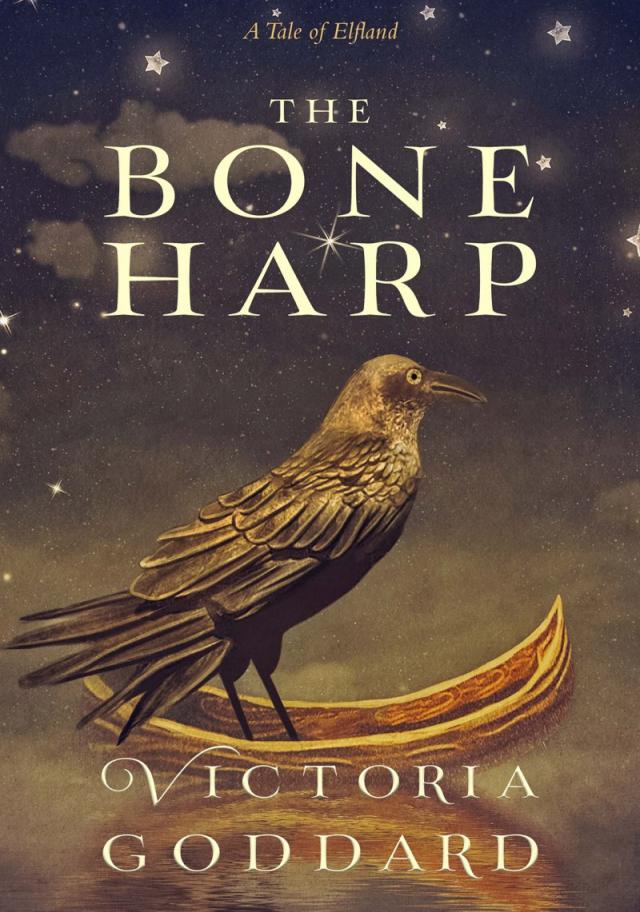


THE BONE HARP
VICTORIA GODDARD
Copyright © 2024 by Victoria Goddard
All rights reserved.
No part of this book may be reproduced in any form or by any electronic or mechanical means, including information storage and retrieval systems, without written permission from the author, except for the use of brief quotations in a book review.
For Wesley,
who was the one to point out this seemed like a story
CONTENTS
I. West of the River
1. The Spring Tide
2. The Sword of the Firnoi
3. River and Rowan and Ash
4. From the Halls
5. Spirit and Bone
6. The Wet and the Dry
7. Tales of the Golden Age
8. The Perilous Hills
9. The Swanlands
10. Mist and Memory
11. The Bridge
12. The Dead
II. The Old City
13. The Breaking of the Lamps
14. The Shadowed Age
15. The City of Ice
16. The King of the Exiles
17. The Age of Homecoming
18. The Flame Imperishable
19. The Seven Sons of Dâr
III. Fair Elfland
20. Skylarks and Harpstrings
21. The Edge of the Downs
22. The Road
23. The Great Bard
24. The Houseless
25. The Smith
26. Rumours
27. The Unforgotten
28. The Lemon Tree
29. The Haunted
30. Painter and Portrait
31. Singing the Summer In
32. Two Eagles, Flying
Author’s Note
CONTENTS
I. West of the River
1. The Spring Tide
2. The Sword of the Firnoi
3. River and Rowan and Ash
4. From the Halls
5. Spirit and Bone
6. The Wet and the Dry
7. Tales of the Golden Age
8. The Perilous Hills
9. The Swanlands
10. Mist and Memory
11. The Bridge
12. The Dead
II. The Old City
13. The Breaking of the Lamps
14. The Shadowed Age
15. The City of Ice
16. The King of the Exiles
17. The Age of Homecoming
18. The Flame Imperishable
19. The Seven Sons of Dâr
III. Fair Elfland
20. Skylarks and Harpstrings
21. The Edge of the Downs
22. The Road
23. The Great Bard
24. The Houseless
25. The Smith
26. Rumours
27. The Unforgotten
28. The Lemon Tree
29. The Haunted
30. Painter and Portrait
31. Singing the Summer In
32. Two Eagles, Flying
Author’s Note
PART ONE
WEST OF THE RIVER
CHAPTER ONE
THE SPRING TIDE
Tamsin came slowly to himself.
He drifted for a long time at the lapping edges between waking and sleep, not quite dreaming, not quite thinking. Even half-asleep he knew it was an inexplicable peace. He held himself there, floating in the warmth, his soul open to the sun, listening to the song of water and wind, the coming and going of the sea.
There were birds singing. Not sea-birds, or not the sea-birds of the waking world; these sang like the memory of birds in the bright and brilliant country of Elfland, the Home Across the Sea, before everything.
The dim thought came to him that perhaps he had nearly woken before, drawn into himself by soft familiar voices, voices that sang the old songs, gentle hands that brushed his hair and stroked his face. But he could not remember: not without waking fully. And he knew even in his half-dream that he did not want to wake fully. When he woke, this dream of peace and warmth and wholeness would break as a wave upon the shore, and leave only the fragmented remnants of himself to struggle sodden and heavy to his feet. It had happened before. Many times before.
He had been very young indeed, the last time there had been peace on waking. For thousands of years he had woken to the pressure of all the curses with which he had doomed himself, the pain and the grief and the gnawing restlessness. When he woke from this dream of singing birds and sunlight there might, indeed, be singing birds and sunlight, but there would be no peace. There would be the silver sword in his hand, the shadow-woven cloak on his shoulders, the endless turning away from comfort. Even with all his enemies long since slain or gone away into their own long rests, there was no rest for him.
Nevertheless Tamsin felt as if he were floating in to shore, borne on gentle waters, the air warm and welcoming, fully embraced. He tried to stay there, one moment longer, but the more he grasped at the feeling, the less he could hold. Resignation settled in, the familiar cold comfort of the only remaining choice, how to respond to what he faced.
Perhaps he could stay another night here, wherever his feet had last taken him. Two nights were all he was granted, two nights in one place before the curse set him once more moving. Perhaps, if there were in truth birds, and sunlight, and what peace could be found Over the Waves, even he could have one day where he … rested.
He could not remember if he had passed one night or two in this place, wherever it was that might be full of singing birds.
Had anywhere been full of singing birds? He did not remember birds singing before he wrapped himself up in his shadows, trusting in the silent weaves to keep him safe through another cold night. It had been so long since he’d been … alive, in any true sense. His memory was starting to fail. He was beginning to lose names. Words. He could not even care.
He had thought more than once he was fraying, fading, his weary soul wearing away his body’s housing at long last, nothing more, in the end, than what he had become, the ghost of long-dead vengeance still staining a world that had no need or want of him, the bright sword in his hand the star of his own much-heralded doom though there were none left to reckon it.
And yet he woke. He passed whatever point it was that would have let him sink back down into the whelming sea of oblivion. He became ineluctably more aware of himself, drawn to that shore of consciousness he had for once managed to evade a whole night through.
He flooded into his body as if poured by some kindly but irresistible hand from a jug of soul, and lay there for a long, long while, listening.
The birds were still singing. He could not fathom their song: there were too many birds, and their voices were too sweet, too liquid, too fast.
(Had he once been able to understand their words? Or had that always only been his friend, his rival, left behind so long ago?)
They were not sea birds at all.
He did not know their names. He listened, drawing their song into himself, their music into the deep wells where he kept his own music, for when he found himself once more alone in the dark and silent places.
Those were leaves in the wind, not waves on the shore. He listened, safe in his own net of shadows and silence. He did not need names. The birds were singing: there were no enemies here.
There had not been enemies for a long time. All the goblins and monsters Tamsin had fought were gone now; all the other elves were gone, too, long ago across the sea.
Tamsin’s family had died long, long ago, but for a time other elves had lingered in the land Over the Waves, before it had been poisoned, before it had died, before Tamsin alone had been left. He alone had wandered the wastes, witnessing the long and deadly winters, the slow and hesitant springs.
Perhaps there had been birds, at the end, here and there. Perhaps even that land was healing after the long and dreadful wars. Tamsin did not remember. He remembered his cloak of shadows and silence, the sword in his hand no longer needing to be drawn, the ceaseless wandering through ever-stranger lands.
Scent came next: he breathed in, out, lingering in the slow patterns of rest. The air was sweet and fresh, scented as with many growing things in the spring of the year.
Faint images came to mind, memories from long ago, of a garden full of irises, purple and gold blooms rich as ripe plums to the nose, gold-dust pollen on the nose of the one—who was it? (he had left her behind, as later all Tamsin’s family had left him behind, so long ago)—she had stuck her face deep into the blooms, declaring rapturously that she would be a bee, a queen among bees, and drink deep of the nectar until she was drunk with its sweetness.
Tamsin sat up.
He sat up, because whatever was in the waking world would be better than falling into those memories. Fraying and fading he might be, but he was not yet so wholly lost to himself as that. Not yet.
His head swam, and he pushed at strange masses of silky stuff half-covering him until he could rub his face with his hands and blink crusty eyes open and—breathe.
The birds were still singing. He blinked against bright sunlight. Green, and green, and green—trees? grass?—his eyes focused: a greensward, a lawn, speckled with tiny pink and white flowers—daisies?—and those were—were golden-bells, with cups no bigger than a child’s fingernail.
Tamsin stared at the green grass, which was brighter than anything he’d seen—anything he could remember seeing—(was that true? But he could barely remember the time before the Oath,
There were grey shadows from nearby trees, gentle on his eyes. He feasted himself on the colours: the grey and the green, the graceful shapes of trunk and branch, the lawn sweeping up the small hillock upon which he sat.
At the base of the mound there were, indeed, irises, purple and gold as in his memory, and silver and wine-red too, and white touched with gold and white touched with blue and white fringed in silver-pink like the inside of a shell. Tamsin breathed in the air, which was sweet and that kind of fresh that felt cool and warm at the same time, refreshing as a draught of spring-water.
There were darker shadows puddled around him, falling over his shoulders, still draped over his back, catching in his ears, the corners of his eyes. They were a strange silky texture, sparkling with static electricity, warm and almost pleasing on his skin. Tamsin closed his eyes. He had not realized how far he had fallen, that he sat in sunlit peace and found a better comfort in the old dark shadows of his curses.
Had he not been done?
He had hoped he was done.
Why was he here, if he had not faded? He could not be home, could not be Across the Sea, could not have finally abandoned his exile and damned his brothers to the final consequences of their misbegotten Oath. Not after so long.
There had been no ship, not for him. Could have been none, after so long. The only way home for him was through the gates of death, and he could not take that road.
They had sworn themselves to the Eternal Night if they did not reclaim the holy fire bartered from the mountain with their father’s soul. Tamsin and his brothers had sworn it. He was the last—the last—he bore the responsibility for fulfilling the Oath, in the faint hope that thereby he might keep his brothers’ souls from the Eternal Night.
Tamsin breathed, and listened to the birds singing, and tasted the air, and remembered without detail that long-ago time when he was a mere elfling laughing with his brothers in the sweet youth of the world.
Eventually he braced himself. In the echoing spaces of his mind he focused, as if he were to sing power into the world, and he sang silently until his body resonated with the silent music of his imagination. Only then did he open his eyes again, protected as best he could make himself against the lingering traps and enchantments of the Old Enemy. They were weak after so long, but so was he, after so long.
He lifted up his hands to touch the smokey-dark shadows clinging to him—and stopped, stunned, when he realized what he touched was hair.
His own hair, tumbling in great wavy masses around him, shadow-dark in this bright sunlight. It caught in his elbows and under his hips as he shifted position, trying to make sense of its existence. He had hair—of course he remembered he had hair—of course he knew that his hair was dark. It was just that it had been so long since he’d seen a mirror that he had forgotten what it looked like.
He had kept his hair shoulder-length so he could wear mourning braids, even though there was no one to see them, no one to care. It had been long habit by then, the two braids from his temples, coiled around his head in a coronet, held in place by a length of ribbon. He had rarely unbraided it, except when it occurred to him to wash it, or when it grew enough that the braids loosened. Then he would take his belt-knife and saw six inches off the ends of each braid, and burn the leavings with a quiet wish (he had so long ago forfeited prayer) that his brothers would find rest and healing in the Halls of Rest, despite their Oath and what they had done in service of it.
Tamsin tugged this inexplicable cloud of hair free from where he was sitting on it, and wondered what it meant that he had woken in this strange, too-beautiful, too-familiar place, with his heart at a kind of peace and his hair loose and longer than he’d ever worn it.
There were strange knots in it, catching his fingers as he clumsily tried to shove the strands behind his ears, and—no, his mind was catching up with himself now, those were braids, intricate and far finer than anything he had been able to manage since his hands had been crippled—
He dropped his hands to stare at his palms, ignoring the way his hair slid back over his shoulders, pooling around him.
(He had been vain of his hair, once. Alone of his brothers he had favoured their father, Tamsin’s hair dark to his brothers’ red copper. He had never been the most handsome of his brothers, nor had his hair been in any way special—in colour it was very common amongst their people—but it had been his, and shown off jewels well, and its texture was lovely. Another thing he had long since forgotten.)
Tamsin’s hands had been scarred by the snap of a fire-demon’s whip, caught foolishly in his bare hands after he’d dropped his sword to kneel at the side of his brother who had died in the battle of Sawwalith (at the side of the third of his brothers who had died in Sawwalith, for the seven of them had entered the enchanted woods, and two only had left). That had been … he didn’t know how long it had been. But well did he remember how the wounds had never healed. He had been able to grasp his sword through the pain, able to make his fingers bend enough to wield it, because that was what he was needed to do. But little else.
Now, in this dream that was not a dream, with sunlight on his head and birds singing undisturbed all around him, the only dark shadows the false ones of his own hair, Tamsin looked at his hands. The livid white-red weal of the burn had faded to pink, and the puckered and melted flesh was only a ridge to his questioning thumbs. It was still visible, still ugly, still a marker of his folly and his grief—but there was no lingering burn, no bone-deep ache; he could move his fingers.
Tamsin had once been reckoned a great bard, before the dragon had taken his voice and the fire-demon the skill of his hands. Before the rising of the sun and moon. Before he had sworn that Oath and started down the path of becoming a monster. Before he had understood anything.
He stared at his hands, head bent, until his tears filled his cupped palms. The sun had descended in the sky: orange-pink beams streamed through the trees surrounding him, catching the tears into flame. He jerked his hands apart at the flash of beauty, and splashed himself with the tears, cringing back as if they would in truth burn. And yet they didn’t.
His hands were healed. The gnawing, dreadful restlessness was gone. He—he might be able—he might be able to speak (he could barely think, sing—)—
He might be able to live.
He could not grasp it. He had thought he was fading. He had forgotten everything.
Tamsin breathed deep, deep, deep, and lay back down in the curve his body fell easily into, his hands folded beneath his cheek, knees drawn close to his chest, tucked into himself like an unborn babe within the womb, and fell once more asleep.
CHAPTER TWO
THE SWORD OF THE FIRNOI
His second waking was swifter.
The birds had fallen silent for a time, and began again to sing. Tamsin roused as the chirps and chuckles and querying notes gathered together into the complex, overlapping songs of the dawn chorus. This time he sat up easily, less dizzily, and remembered that his hair was everywhere. He brushed it out of his mouth, and wondered a little more consciously about the braids holding some of it back. When his fingers touched something hard, metallic, he was quicker to realize it must be an ornament and untangle it from his hair.