The hope, p.1
The Hope, page 1


THANK YOU FOR DOWNLOADING
THIS ORENDA BOOKS EBOOK!
Join our mailing list now, to get exclusive deals, special offers, subscriber-only content, recommended reads, updates on new releases, giveaways, and so much more!
CLICK HERE TO SIGN UP
Thanks for reading!
TEAM ORENDA
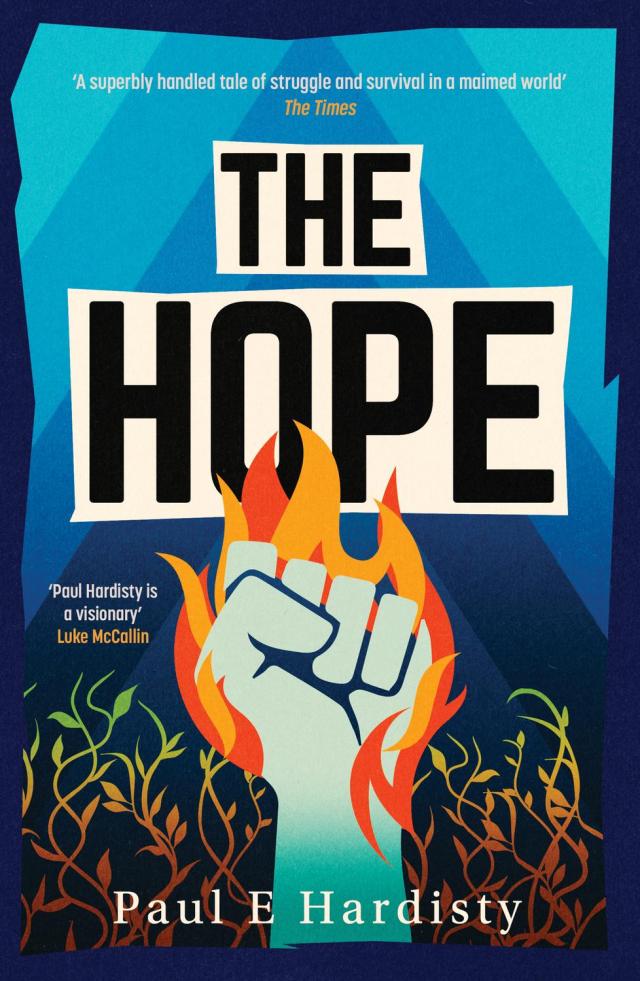
The Hope
PAUL E. HARDISTY
AUTHOR’S NOTE
The Hope was born in part from requests from readers of The Forcing and The Descent for a hopeful conclusion to the series. In my professional life as an environmental scientist I have always maintained a deep optimism for the future, a conviction that despite all the challenges we face, there is a pathway for us to reach the world we all want. Like The Forcing and The Descent, The Hope is based on scientific fact. The best information and analysis we have show clearly that we can reverse biodiversity loss, tackle climate change, end poverty and provide a good life for everyone on Earth, if we want to. If we are willing to do what it takes. If we are brave enough. If we have foresight. That is what The Hope is about.
Bringing the book to life was not easy. As with the previous instalments in the series, it was my fantastic editor, West Camel, who helped me to find the right way to get the story across. Publishing books like these takes courage and foresight. Thanks to my publisher Karen Sullivan, who has both qualities in abundance, for all her support, and for persevering as a mid-size independent publisher in a world of big publishing predators. Thanks to my family and friends for their love, friendship and support. I couldn’t do it without you. And lastly, thanks to all my fabulous readers around the world. It’s you who give me hope for the future.
For the good people of Earth.
‘Whoever makes the journey to a tyrant’s court becomes his slave, although he went there a free man.’
—Sophocles
Contents
Title Page
Author’s Note
Dedication
Epigraph
Prologue
Part One: Girl
Part Two: Heroine
Part Three: Warrior
Part Four: Woman
Epilogue
About the Author
Also by Paul E. Hardisty and available from Orenda Books
Copyright
Prologue
Author: Mr President, you have spoken repeatedly about the pathway that we might have taken to avoid the calamity that befell the world. Frankly, given your record, do you think anyone will listen?
Ashworth: I offer no defence for my actions. It was a long time ago. We did what we had to do, what we thought was right. Our intentions were good. Our execution was disastrous. I accept your condemnation. But the pathway, it was real. It still is.
Author: It may have existed as an idea, but was it ever attainable?
Ashworth: The pathway isn’t a goal. It’s a way of getting there. The goal was always clear. It still is. Live in peace, in the paradise we have been given. And don’t fuck it all up.
Author: Fair enough. So, how?
Ashworth: Focus not on the few things that divide us, but on the many that unite us: the desire for peace, the hope for prosperity, the love for our children and our wish for a decent future for them. Compromise on the rest. Find courage – the courage to stand up to bullies, to do the difficult things when required, to sacrifice for the greater good. Work together, collectively, recognising that our differences aren’t failures. Cultivate an educated, literate, and engaged populace able to discriminate truth from lies and participate in democracy. Dare to imagine the future we want, and the futures we don’t. Look after our world and share its bounty fairly. Do these things, and watch everything change.
Author: Simple to say.
Ashworth: And hard to do. But there is one element that binds them all together, makes them all possible. Something that takes all the ifs and transforms them into a single, inevitable, must.
Author: Go on.
Ashworth: Think of it as a question, something we each need to ask ourselves. Something someone very close to you believed in: how big is your heart? It’s a very old message.
Author: Is there anything more specific?
Ashworth: You don’t sound convinced.
Author: It’s not about convincing me, Mr President. This is about the people who might one day read this. Everything you have described seems self-evident. If everyone undertook to live their lives in the way you describe, of course things could have been different.
Ashworth: Not everyone, Kweku. Not even most people. But enough of us. Enough.
Part One
Girl
1
This is where I will start, the dividing point in my life. The moment when everything changes.
When the shouts rip through my dream, my first thought is of him.
I hover there for a moment on the edge of sleep, not wanting to register any of it, holding on to the snug illusion of safety. Then the crash of a door being kicked in. Raphael’s voice raised in warning, calling out to me from downstairs. Run.
And then a scream that will remain with me forever. Pitched, choked, a cry of pain and bewilderment, followed by the sound of a single gunshot that pierces our cartoon-painted driftwood walls as if it was my heart.
Adrenaline flooding me dizzy, my fairy wren heart filling my mouth, I grab my bag from its spot under my bed and run to the stairs. Uncle has drilled us for years, and although I know that it is happening, as he predicted it might but hoped it never would, none of it seems real. Something has gone terribly wrong.
Behind me, footsteps banging through the house, not the respectful footfall of friends and relatives, but the heavy, cloddish hooves of men-turned-animals, and then the sound of books being swept from shelves, pillars of knowledge toppling to the plankboard floor of the library that we have spent so long building. Preserving the truth, Uncle always called it. Safeguarding the future and honouring the past.
Half blind with tears, reality encroaching, I run up the stairs to the attic, open the carefully hidden hatch Uncle put in the eaves for just this purpose, and climb out into the darkness of a million stars. I stop there on the roof, shivering in my nightdress, and realise that I have forgotten to put on the shoes and coat that were carefully set out by my bed the night before, as they have been every other night of my life here, for just this contingency. And there I stand, naked to the heavens, and I weep.
I always assumed that if this moment ever came, he would be there with me. That he would look after me, guide me. Just as he had done so many times before, growing up together on that wild western coast that I miss so much. We even talked about it a few times, when we were younger, that we would do it together, and in my dreams we would move, fingers entwined, across the moonlit rooftops and down into the alleyway and through the boneyard then up the trail through the forest to the shelter in the mountains, my hand never leaving his.
But now that the moment has come, I am alone. He is away somewhere – I don’t know where. It’s been two months now, and still, every time I hear a noise out on the street I run to the window to see if it might be him come home for a day or two. That would be enough, just to know he is safe. But everything is different now, and as I grow older, I realise that it was always different, ever since my parents were killed.
It’s the shouting that brings me back, the sound of muffled voices rising through this ramshackle construction. I wrap my arms around my sides, as much against the fear as the cold wind blowing across the bay, and I start across the roof. The corrugated steel ridges my soles and the cold wetness of the night dew seeps between my toes. I feel the thud of footfall through the casements, the tremors from flung-down furniture shivering through the bones of this old house. And then the sweet smell of burning paper and a faintly gathering glow reflecting from the neighbouring houses, followed by the jaw-snapping sound of flames reaching up through smashed windows. And then I am back on that island, running through the night, the sky glowing fire red above me, swimming across that dark, bloodstained lagoon on Uncle’s back.
I try to push the memory away, but the fear pushes back, a dark ballast welling up from the deepest part of me. I hurry along the roof and tippy-toe my way across the ironwork trestle to the McMurtry’s, careful not to look down at the ground below, focusing instead on the chimney stack in front of me. Across the chasm, I look back at our burning house. Two men have appeared and are standing in the shadows near our back gate. They wear dark clothing. Assault rifles hang in loose entitlement across their bulky, armoured bodies. I have seen them before, long ago, jumping from helicopters, chasing me through the bush. Valliant’s men. Soldiers of the Eminence. If they look up now, they will see me silhouetted against the starlight, near naked, all limbs, tightrope girl.
I crouch low, wait, my breath coming in heaves. The soldiers are speaking quietly to each other, shifting on their feet like restless animals, and I can see the steam from their cattle breath orange in the firelight, and they are the fire-breathing monsters of my childhood dreams come to take me away. If Uncle or Raphael tries to escape out the back door, they will run straight into these waiting beasts. I start to turn back. I must warn them.
I have taken three steps back when Uncle’s words come to me: If anything happens leave as fast as you can and get up the mountain. Don’t stop for anything or anyone. Get to the shelter and stay put. We will meet you there.
I stop myself. My legs and feet want to run back to the burning building, but I know it’s too late. And though I curse my meek compliance, I do as I have been told. I turn away and move across the slippery roof shakes of McMurtry’s place and jump the small gap to Lindsays’ roof. Behind me the flames are reaching higher and grey smoke pours from our windows into the sky. Even from here I can feel the heat from the fire pushing into my back like an angry hand. Surely Uncle and Raphael and Boy have managed to get out by now, maybe by the side exit that Uncle and Boy knocked through the front bedroom wall into the narrow passageway between our house and McMurtry’s. I don’t want to think about the gunshot I heard. Possibilities come to me unbidden but I push them away, swallow down my fear and keep going.
The ladder’s rails are cold in my hands. I climb down into the laneway, reach the Lindsays’ back fence and peer across to the boneyard, dark and quiet, and then around the corner. The two soldiers are standing as before, fire breath flicking from their bony nostrils.
There is a shout and one of the men snaps his head in my direction and for a moment he is staring right at me. I freeze, unable to look away. I am sure that he has seen me. Fire burns in his eye sockets and I can see his chest expanding as he breathes in the cold air and then an eternity later his shoulders falling in foul exhalation. Even from here I can smell him, the warm piss and beer-tavern stench of him.
I am about to turn and run when he jerks his head towards the other man and nods. I can’t hear what they are saying but I understand. It’s over. Let’s go. They start away down the alley. It is so clear, this moment in the alleyway, that feeling of exquisite relief replaced immediately by reality’s cold bite.
I start towards the boneyard. I am halfway across the track when there it is, hovering before me. I jump back in fright. It is so close that I can see the little gears whirring as the camera eye swivels towards me, the lens focusing in then out again, sharpening, the retina dark, soulless. Its rotors whirr and tilt as it begins to circle me slowly, never looking away, the red light on its belly blinking, and it is as if I am looking through the translucent skin of some ancient reptile, watching its heart beat out a steady, implacable rhythm. Every time I move it matches me, locking my gaze with its own. A machine controlled by a machine. That’s what Raphael said. A person may be looking through it at you, but chances are it’s a machine, intelligent in a way a human being can never be. I turn and run, but it zips above me and blocks my way again. I lash out at it with my hand, and like a startled animal it backs away, then approaches again once I drop my arm.
‘Go away,’ I shout.
It tilts to one side. Has it heard me?
‘Go away. I don’t like you. Look what you have done to my home.’
It repeats the tilt, hovering as before. I duck down and run doubled over towards the trees. Again, it follows and places itself before me, the unblinking eye staring at me. It is so much faster than I am. What does it want?
‘Evil. You are evil.’ I scream out my rage. ‘You killed my mother and my father. I hate you.’ I lash out at it like a wounded panther and it darts back. I drop to my knees, start searching the ground for something, anything, to throw at it. My hand closes around a stone. I stand and hurl it with all my might. The drone is very close and the stone hits it flush in the chest. It wobbles a moment and then one of its rotors peels away and flies off into the night, then another, and it careens away towards the trees and smashes itself to pieces against the trunk of a pine.
I stand above the wreckage, panting, weeping. How they have found us, and where my family is, I do not know. What I understand very clearly is that I am on my own.
2
And that’s how it happened. God’s truth, if there is such a thing. If there is a God.
Still shaking from my encounter with the drone, I dart across the alleyway and into the boneyard, then pick my way towards the edge of the forest, past rows of rusting vehicles and piles of old refrigerators and washing machines and the shattered, vacant stares of TV screens and computer monitors, and all of the other things that no longer work the way they once did because we don’t have electricity or anything connected the way Raphael says it all once was. Not here, anyway, on this mostly dead continent. But that’s another story.
It doesn’t take me long to find our path, just beyond the shack with the caved-in roof and the big gum tree growing through the cracked foundation brick. I stand a moment and look back at the flames rising into the night. I think of Uncle and hope that he has managed to escape. I consider waiting here for him. He must be just behind me. He must be. I think of Leo, too. I wonder where he is, and when he will come for me. And I am struck by an overwhelming terror at the thought that I might never see him again.
I breathe in the cold air, let it wash over me. I wait a while, longer than I should, still hoping that I will see Uncle and Raphael and Boy come running through the boneyard towards me, the fire’s glow painting the boughs of the trees, flames reaching up to the sky from my burning window. And standing there watching the house burn, the knowledge of what is being lost comes to me very clearly, the embers of all those burning thoughts spinning up into the night sky in a convection of sorrow.
I should run. I know that. They will send another drone. But I can’t detach. I just stand there and watch it all burn. Even from here I can feel the heat from the fire. I take a step back, and then another, unwilling to let go. Everything and almost everyone I know is there, was there. After a while I turn my back to the fire and let my face cool. Tears track cold across my burning cheeks. I feel the cold air rushing towards the fire blowing in my hair and pushing my nightdress against my body. The smell of charred wood and tar bites at my nostrils. And when the roof caves in with a crash, spitting a rush of sparks high into the night sky, I face the fire again and watch the red embers of my life float up towards the mountaintops.
And that’s when it hits me, I think, for the first time. Watching those little glows of orange and red light dance away on the wind. That crushing sense of responsibility. The feeling that now, after everything that has happened, after all that we have tried to do, it is up to me. I turn and start through the forest and up the mountain towards the shelter, the stars shining down through the trees, the glow of the fire receding slowly behind me.
3
The memory looks up at me through the clear cold water of the cove where I was born. Though I do not understand it, and have since realised that this recollection is as much my brain’s anguished creation as it is a true account of what transpired there, so long ago now, I can see the new-cut surfaces of the iron-granite sea floor strobing sunshine, the raised arms of the kelp swaying in alarm, the small cold-water fishes with their dark eyes and silver bellies shunting with the current. I am standing in that place I love, watching the waves wash up across the black shingle as if nothing is about to change, listening to the hush of the water and the tumbling of the pebbles carried helpless back out to sea, oblivious. The sun makes my skin tingle like a kiss and the breeze tousles the leaves of the trees, and I laugh. The boy I am too young to realise I love is with his father and mother, my uncle and auntie, somewhere up on the gorse-flower ridge. My father is working with his horses in the forest, my mother is cooking our dinner at home, and my grandmother is tending her sunflower garden outside her house on the point. From where I stand, I can see her, a stooped figure working her hoe. I am three years old and my world is about to be ripped apart.
It’s the sound that comes first, like wings cracking lightning. Then I see them, far off still, a pair of black dragonflies skimming over the waves. But these are not the beautiful insects I love to watch dancing over the rock pool with their blue iridescent backs and wings like lace. I blink and they are over me. I have never seen anything move so fast. The sound they make hurts my ears, and I press my palms against them to make it go away. But of course it doesn’t go away. They flash above me, and for a brief moment that now feels like a lifetime I can see the whirring wings, the huge, scaled black bellies, finned and lanced, and as they flare and bank, the men perched in the open sides, looking down at me through their fisheye goggles. The machines pitch up and stop. Dread floods me. They are hovering above our house. The blast from their rotors sends leaves and branches flying in every direction. Everything blurs. Above the storm, I hear my mother scream my name.